
Save the date
NORMA 2027
The 11th Nordic Mathematics Education Conference
June 8–11, 2027
Tallinn University, Estonia
Details, registration and full website coming soon.
About NORMA
NORMA 2027 is the Nordic Mathematics Education Conference. The NORMA conferences are organized in collaboration with NoRME— the Nordic Society for Research in Mathematics Education, https://sites.google.com/view/norme/home, NoRME is open for membership from national societies for research in mathematics education in the Nordic and Baltic countries.
The NORMA conferences offer forum for discussions and constructive interactions among researchers, teachers, teacher educators, graduate students and others interested in mathematics education research in the Nordic and Baltic context. NORMA are small-scale conferences that emphasize interaction between participants and interplay between scientific and social activities. NORMA 27 will have a limit of 380 participants. The conference language is English and all presentations will be in English. The scientific program and the review process are organized and managed by the international program committee (IPC) for NORMA 27.
Tentative agenda of the multi-track conference:
- Tuesday, June 8 - Thursday noon, June 11: the main conference
- Thursday afternoon, June 11: school visits, social programme (optional)
The conference theme
(No) Tradeoffs Between Human and Machine Intelligence in Mathematics Education
Recent advances in artificial intelligence (AI) and machine learning (ML) are rapidly transforming educational ecosystems, reshaping how mathematical knowledge is constructed, communicated, and assessed. From adaptive learning systems and intelligent tutoring to automated feedback and generative models capable of solution synthesis, machine intelligence promises unparalleled affordances for personalization and scalability. At the same time, concerns about algorithmic opacity, epistemic displacement, and unintended impacts on students' conceptual understanding foreground enduring questions about the role of human agency, teacher expertise, and collective mathematical practices (Heffernan & Heffernan, 2014; Holmes, Bialik & Fadel, 2019). The proposed theme invites the Nordic-Baltic mathematics education research community to explore whether and how human and machine intelligence can be mutually reinforcing rather than in tension. Instead of framing the relationship as a zero-sum game where gains in machine support undermine human pedagogical authority or cognitive engagement, this theme foregrounds the interplay and co-construction of competencies, pedagogies, and technologies that honor the distinct yet complementary strengths of shared human-machine cognition, where human is always in the loop as a decision-maker. This dialogue is timely: contemporary research suggests that AI-augmented learning environments can support individualized scaffolding (Spiteri & Dingli, 2025), yet meaningful learning and mathematical agency remain grounded in human interpretation, negotiation, and social reasoning (Noss & Hoyles, 1996; Kirschner et al., 2011).
For NORMA 2027, we define machine intelligence broadly, encompassing not only widely used AI chatbots/LLMs, but also adaptive learning systems involving algorithmically informed analytics, intelligent feedback mechanisms, and data-informed personalisation. Human intelligence encompasses individual and collective sense-making, teacher professional judgment, and culturally situated mathematical practices. The conference invites research that articulates theoretical framings, empirical insights, and design principles that transcend simplistic 'tradeoff' narratives to foreground synergies, tensions, affordances, and constraints in mathematics education in the AI era.
Mathematics education has historically engaged with technological innovations—from calculators and dynamic geometry environments to intelligent tutoring systems—raising persistent questions about what and how students learn. For example, research on computer-based tools underscores the importance of instrumental orchestration and teacher mediation in technology-rich contexts (Drijvers, 2003; Trouche, 2004). As systems become increasingly autonomous and generative, similar questions arise about who holds epistemic authority and how students develop mathematical reasoning rather than algorithmic mimicry (Hod & Karp, 2023). Critical perspectives also highlight ethical and equity considerations in AI deployment (Ee & Choi, 2021), challenging researchers to articulate frameworks that integrate technological innovation with pedagogical integrity.
The overarching ambition of NORMA 2027 is to negotiate an inspiring research agenda that moves beyond simplistic dichotomies between human and machine intelligence in Nordic and Baltic countries. By foregrounding collaboration, criticality, and constructivist sensibilities, this theme invites scholarship that reconceptualizes intelligence in mathematics education as distributed, situated, and co-constructed.
Conference themes
Submissions are welcome across a range of methodologies - design research, qualitative studies, large‐scale data analytics, theoretical and conceptual work—that connect to the theme, including but not limited to:
- Human–AI co-agency in mathematics education
- Studies on assessment, scaffolding and feedback
- Studies on collaboration between teacher(s) and researcher(s)
- Design-based research projects
- The use of particular research-based methods or approaches in teaching
- Professional development of pedagogues or teachers in small or large scale projects or other interventions studies
- Classroom observation studies
- The theory - practice interplay in teacher education
- Research-based curriculum design
- Theoretical studies on the theme of the conference
Publication formats
NORMA 27 welcomes:
- Regular papers, summarising and discussing original research results or presenting conceptual ideas (maximum 8 pages in total, including references, figures and appendices).
- Symposium proposals, consisting of a session summary and three to six symposia papers (maximum 8 pages in total, including references, figures and appendices). The symposium session summary of no more than 1 page addresses the following elements: symposium title, objectives of the session, overview of the presentation, scholarly or scientific significance, and structure of the session.
- Posters, summarising ongoing or tentative research (maximum 1 page; presented in the poster session, but not included in conference proceedings).
- Short communications, summarising ongoing or tentative research (maximum 1 page; presented in a 10-minute parallel session, but not included in conference proceedings).
- Working group proposals, summarising a 90-minute interactive session (maximum 2 pages) dealing with one or more research questions the organiser(s) wish to discuss and work on with other participants, possibly to initiate future collaboration.
The regular papers and sympposia accepted to NORMA 27 will be published in conference proceedings and submitted for indexing by Scopus. Formatting guidelines will be available here by September 2026, the authors are expected to use CERME template and APA7 citation style.
All submissions should be within the theme of the conference and communicated in English. Submissions can only take place through the conference website before the stipulated deadline for each format (see below). All submissions fulfilling the format requirements will be reviewed and receive feedback before the deadlines given below. You are allowed to submit up to one proposal of each type, with the exception that you can only submit either a Regular Paper or a Short Communication, but not both. You are allowed to be presenting author of either a Regular Paper (including those bundled within a Symposia) or a Short Communication. Further, you can be presenting author of a Poster Presentation and Working Group in addition. Note, that it is not allowed to change the presenting author after the review process. All contributions go through a review process. If you submit a Regular Paper or a Symposia-paper, the review process is double blinded with at least two reviewers and you will be asked to act as reviewers for other papers. You may be asked to review up to two papers. Guidelines for contributions and for the review process can be found on the conference website. Working Group proposals, Short Communications and Posters are reviewed by the program committee.
Important dates
NORMA 2027 submission and review process
- Submission system opens
- Regular paper submission deadline
- Submission deadline for other types
- Peer reviews due
- Notifications of acceptance
- Submission of revisions
- Early-bird registration deadline
- Registration closes
- NORMA 2027 conference
- Contribution to proceedings
The submission process for NORMA 27 will open on 1st of November 2026 on the current web page. Submission deadline for regular paper is 7th December, while other types of contributions (posters, short communications, working groups, symposia) are due by 15th January 2027. Notifications of acceptance will be delivered by 7th March 2027. Early bird registration will be available from 1st December 2026 until 30th of April 2027 at 390 EUR. After that date, the registration fee will be 450 EUR and registration will remain open until 29th of May 2027.
Venue
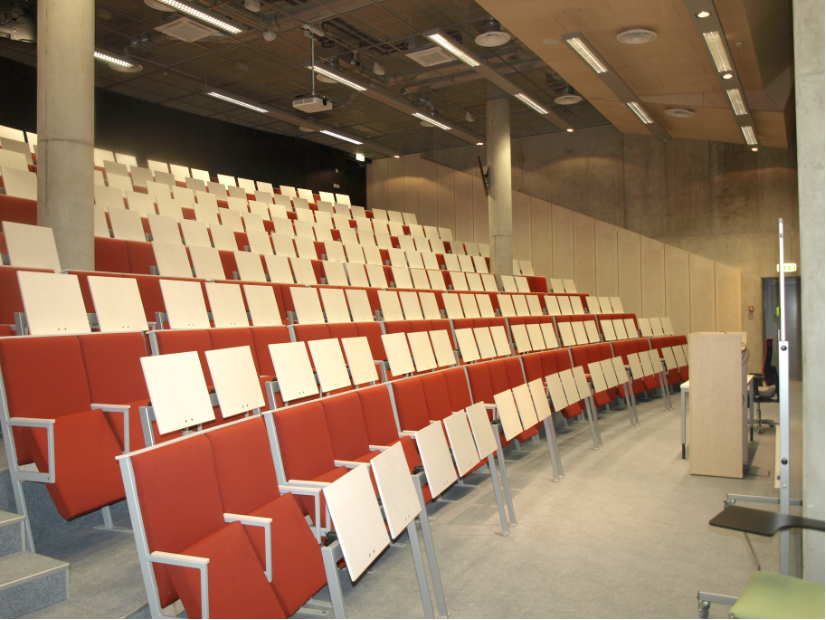
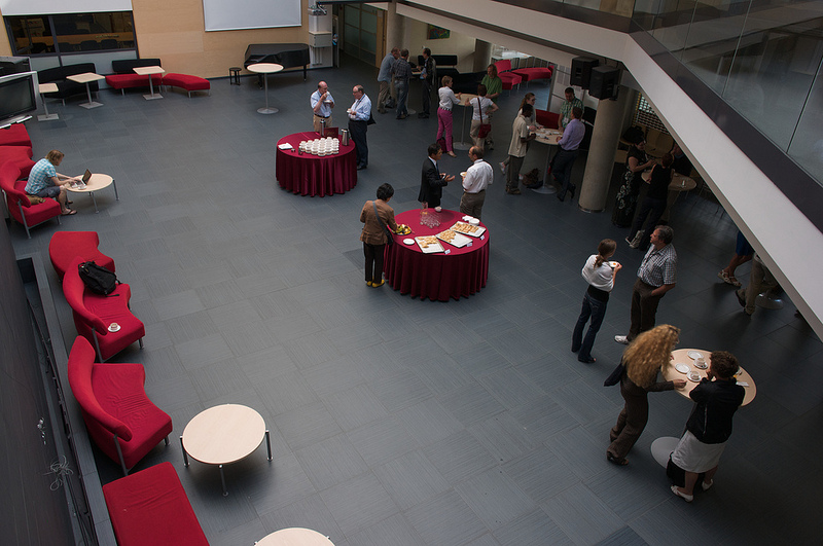
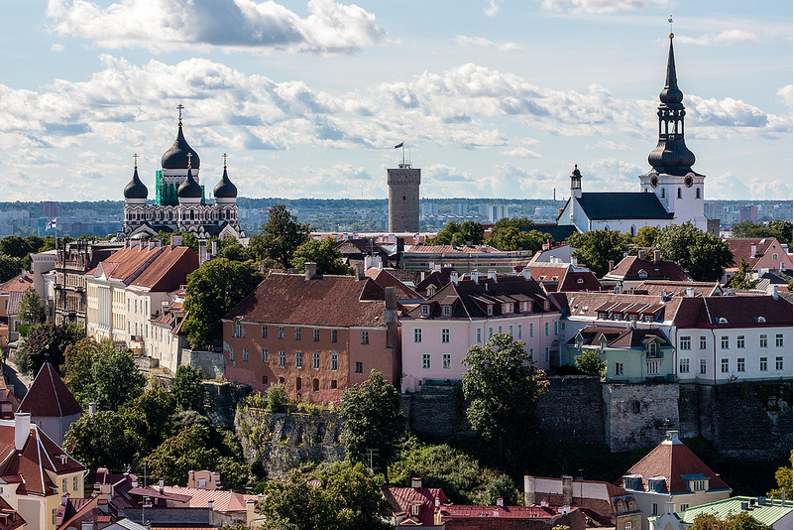
NORMA 27 will be hosted by Tallinn University (TLU, see: http://www.tlu.ee/en) - the youngest and most dynamic university in Estonia, focusing its research and study programmes in six domains: educational sciences, social sciences, humanities, natural sciences, digital technologies, fine arts and media, sports and health sciences. TLU is the third largest public university in Estonia with 7300 students and more than 500 academic staff. Instead of traditional faculty structure, TLU consists of 6 schools. School of Digital Technologies (DT, see www.tlu.ee/en/dt) is the largest mathematics teacher education provider in Estonia.
Photos
.png)


Contact
For early enquiries, please contact the conference organizers: martl
@ tlu.ee
Further contact details will be provided on the full conference
website.